

A mortgage repayment is made up of two parts: the capital (the amount you borrowed) and the interest your lender charges. On a standard repayment mortgage, each monthly payment reduces your outstanding balance as well as covering the interest, so you owe nothing at the end of the term.
Capital and Interest On a repayment mortgage, your monthly payment splits between paying off the loan itself and covering the interest that has accrued. In the early years, most of your payment goes towards interest rather than capital. This shifts over time as your outstanding balance reduces, so more of each payment goes towards the loan and less towards interest. By the end of the term, you own the property outright.
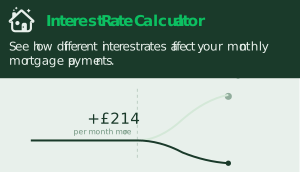
How the Interest Rate Affects Your Payment Even a small change in interest rate makes a meaningful difference to your monthly repayment. On a £200,000 mortgage over 25 years, the difference between a 4% and a 5% rate is around £100 per month. Because mortgage rates change regularly and each lender prices risk differently, it is worth comparing whole-of-market options rather than accepting the first rate you are offered.
Fixed Rate vs Variable Rate With a fixed-rate mortgage, your monthly repayment stays the same for the duration of the fixed period, typically two, three or five years. With a variable or tracker rate, your repayment moves as the Bank of England base rate changes. Fixed rates give certainty; variable rates can save you money if rates fall but expose you to increases if they rise. Most borrowers choose fixed rates for the predictability they offer.