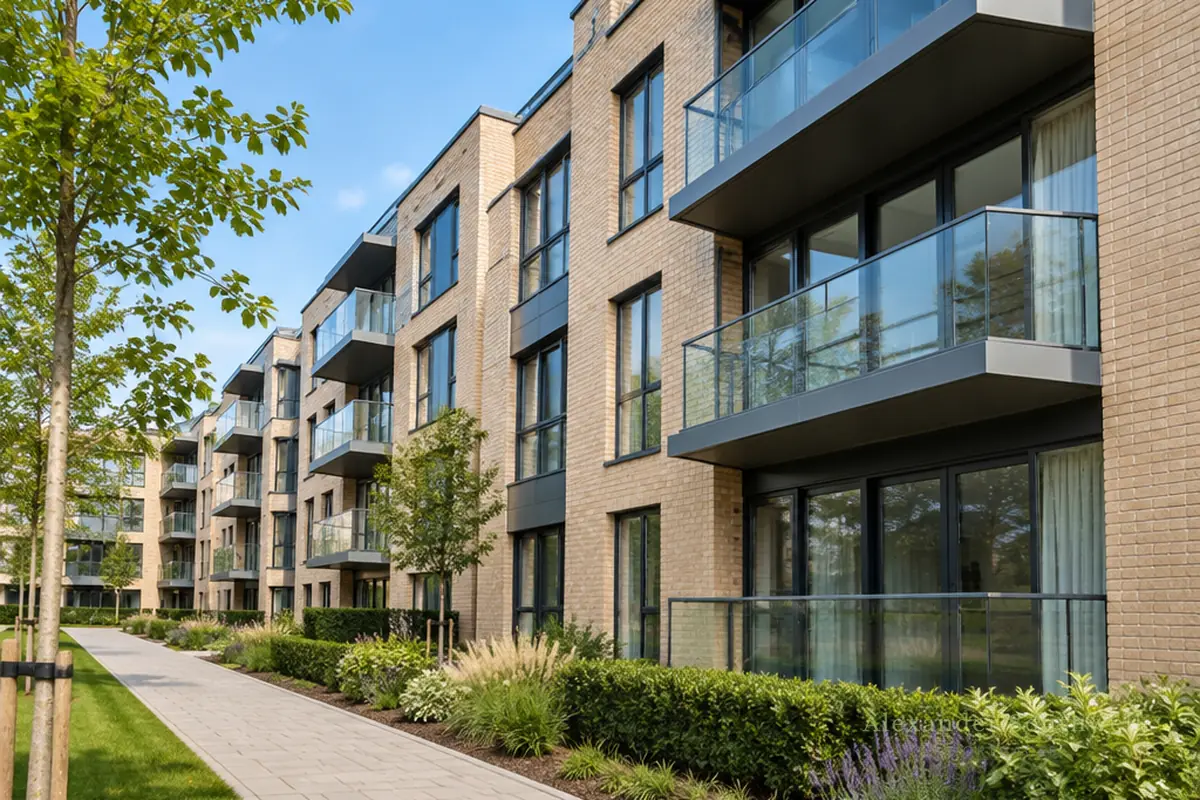
Shared Ownership properties are provided through housing associations or local authorities. You buy a share of the home and pay subsidised rent on the remainder. You only need a deposit based on your share, not the full market value, which significantly reduces the upfront cost compared to buying outright.
Over time, you can buy additional shares in your home through a process known as staircasing, either by borrowing more from your lender or making a cash payment. Most people staircase until they own the property outright. When you contact us, we will walk you through every stage from initial eligibility through to your mortgage offer.
"Speak to us before you reserve a shared ownership home. Lenders, housing associations and leases all have their own rules, and getting them lined up early saves weeks."
To qualify you must typically have a household income of no more than £80,000 per year (£90,000 in London), be a first-time buyer or a homeowner who cannot currently afford to buy, and intend to live in the property as your main residence. Our advisers assess your full situation to confirm your eligibility and find the right lender for you.

We have broken down the shared ownership process into focused guides. Explore how the scheme works, what your costs will be, and how to increase your ownership over time.
Understand the scheme, who is eligible, how deposits work, and what to expect at each stage, from initial enquiry through to getting the keys.
Find out what mortgage rates are available for shared ownership properties and how the deposit, monthly rent and service charges all fit together.
Learn how staircasing works, how shares are valued at market rate, and when it makes sense to increase your ownership percentage.
Find out how to sell your shared ownership property, when the housing association has the right of first refusal, and how to remortgage to a better deal.
Shared ownership is one of the most common ways our first time buyers get onto the property ladder, and one of the most misunderstood. Here is how it works in plain English, with real numbers.
You buy a share of a home, usually between 10% and 75%, and take out a mortgage on that share only. You pay rent to the landlord, normally a housing association, on the remaining share. Your deposit is a percentage of your share, not the full price, which keeps it much smaller.
On a £300,000 home, a 25% share costs £75,000. A 10% deposit on that share is £7,500, so you borrow £67,500. Mortgage payments over 30 years at 4.5% would be about £342 a month, and rent on the remaining £225,000 at 2.75% a year is about £516 a month, plus any service charge. These figures are for illustration only.
Fewer lenders offer shared ownership mortgages than standard ones, and each has its own list of housing associations and lease terms it will accept. Some high street banks and building societies lend, plus a few smaller lenders. Knowing which mortgage lender suits which landlord saves weeks.
Most shared ownership homes are new builds, but you can also buy pre owned properties from an existing shared owner who is selling. The lease you take on may be an older or newer model, which changes the minimum share, the repairs rules and how you buy more shares later.
In England your household income must be £80,000 or less, or £90,000 in London, and you cannot own another home when you buy. Most buyers are first time buyers, but former homeowners and existing shared owners moving home can apply too. Some homes also have local connection rules.
People often mix these up. With a shared equity scheme, such as the old Help to Buy equity loan, you own the whole home and someone else lends part of the deposit. With shared ownership you own a share and rent the rest. Shared equity mortgages and shared ownership mortgages are different products.
The pros are a smaller deposit, lower monthly costs than buying the whole home and a route to full ownership. The cons are rent that rises every year, paying all of the service charge, needing permission for some home improvements, and a few extra steps when you sell.
You can pay stamp duty on your share only, or on the full value in one go, and first time buyer relief can apply. Legal fees are usually a little higher than a normal purchase because your solicitor has to check the shared ownership lease as well.
Home Ownership for people with Long term Disabilities, known as HOLD, is a version of shared ownership for people whose needs are not met by the homes on offer. It lets you buy a share of a home that is for sale on the open market. Ask us and we will tell you if it could work for you.
We also help existing shared owners remortgage, buy more shares and move. Our guides on how shared ownership works and staircasing go into more detail.
Thinking about shared ownership? We will work out what share you could afford in one call.
Call 03300 432 428We are fee free on over 90% of cases. Many shared ownership mortgages are under £100,000, where a £299 fee applies, and complex or adverse cases can carry a fee of up to £995. Remortgages are always fee free, and we always tell you about any fee before we start.
Your home may be repossessed if you do not keep up repayments on your mortgage.