

Shared ownership is designed to help people who can't afford to buy on the open market. It sits between renting and full ownership, giving you the stability of owning a home and the ability to build equity without needing a full deposit. But your monthly outgoings are more complex than a straightforward mortgage, and this calculator helps you understand all of them before you commit.
Your mortgage costs With shared ownership, your mortgage only covers the share you're buying. Buy a 40% share of a £280,000 property and you're taking a mortgage on £112,000, not £280,000. That makes the deposit far more manageable: a 10% deposit is £11,200 rather than £28,000. Your mortgage rate, term, and the size of your share all affect your monthly repayment, so it's worth trying a few different combinations in the calculator above to see what works for your budget.
The rent on your unsold share The rent you pay to your shared ownership landlord is subsidised rather than market rate, typically around 2.75% a year of the unsold share's value. So if you're buying 40% of a £280,000 property, the unsold portion is £168,000. At 2.75%, that works out at roughly £385 per month in rent. As you staircase and buy more shares over time, that rent reduces proportionally. Reaching 100% ownership means no rent at all, though you'll need a standard mortgage at that point. Bear in mind that the rent usually rises each year, by up to CPI plus 1% on newer leases or RPI plus 0.5% on many older ones, so factor this into your long term planning.
Service charges and what to watch for Shared ownership properties are almost always leasehold, so you'll pay a monthly service charge in addition to your mortgage and rent. These cover building insurance, communal maintenance, and a management fee, and can range from under £50 to well over £300 per month. The figures aren't always transparent upfront, so before committing to a purchase, request a copy of the most recent service charge accounts and ask whether any major works are planned. Large unexpected bills, known as Section 20 notices, can catch shared ownership buyers off guard. A good mortgage broker will help you understand the full cost of ownership before you sign anything.
Shared ownership guide
Shared ownership has three monthly costs, not one: the mortgage on the share you buy, rent on the share you don't, and a service charge. Most people only get quoted the first. This shared ownership calculator adds all three together so you can see your total monthly cost before you speak to a sales team or reserve a home. Below I explain how each figure is worked out, what the scheme rules are, and the things I check for clients before they commit.
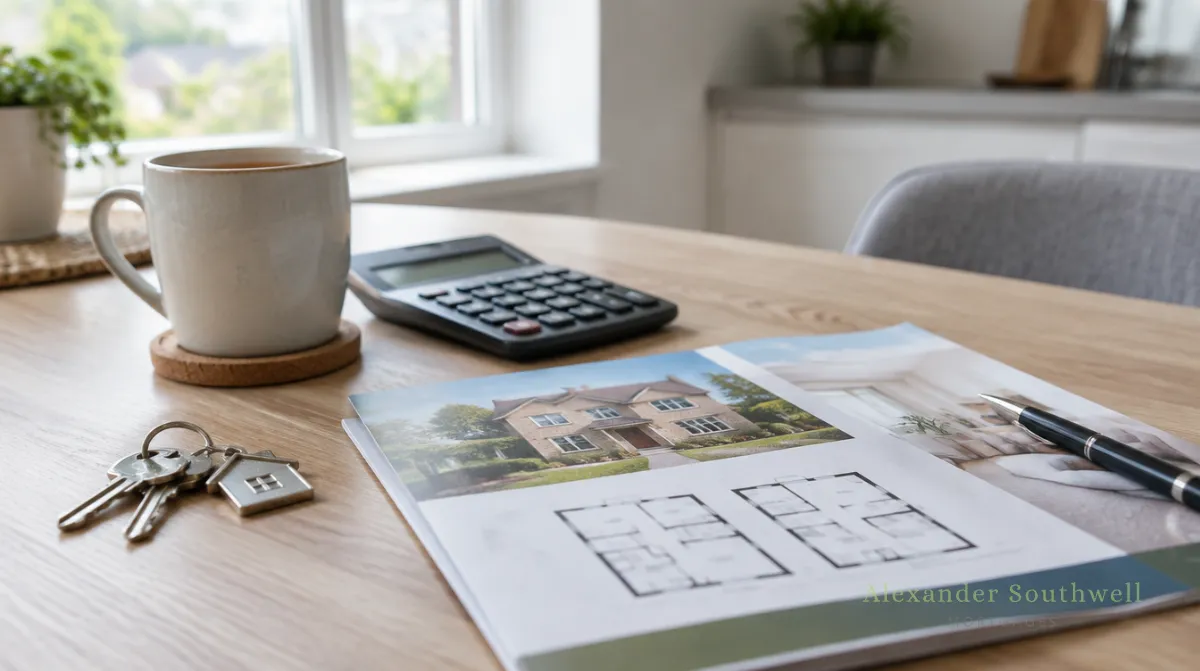
Enter the full market value of the home, the share percentage you want to buy, your deposit amount, the interest rate and the mortgage term. The calculator then shows your share value, the mortgage you need, your monthly mortgage payment and the estimated monthly rent on the remaining share.
The total monthly figure is the one to budget around. Add the service charge from the development page or the sales consultants, because it varies from home to home.
In England, your household income needs to be £80,000 or less, or £90,000 or less in London. You also need to be one of the following:
Some homes also ask for a local connection to the area.
The minimum share on newer homes is 10%, and the most you can buy at the start is 75%. Many older schemes still start at 25%. Your share value is simply the percentage multiplied by the full market value, so a 40% share of a £280,000 home is £112,000.
Lenders and providers will check the share is affordable for you, but not so affordable that you could buy a bigger one. It is worth running a few share percentages through the calculator to see where you land.
You only need a deposit on your share, not the whole property value. Most lenders ask for 5% to 10% of the share value, so a £112,000 share needs a deposit of £5,600 to £11,200. The shared ownership mortgage covers the rest.
Not every mortgage lender offers shared ownership mortgage products, and the ones that do each have their own criteria. As a whole of market broker we can compare the lenders that do. Our shared ownership mortgages page explains the process in more detail.
You pay rent on the share you don't own. For most new shared ownership homes the annual rent starts at around 2.75% of the value of the remaining share, which is why the calculator uses 2.75% as its estimate. It is then paid on a monthly basis.
Please note that older homes can be higher. Always check the estimated monthly rent in the key information document before you reserve, and enter your own figure if it differs.
Rent goes up once a year. For new leases on homes funded through the government's affordable homes programme since 12 October 2023, the maximum increase is CPI plus 1%. Many older leases use RPI plus 0.5%, which has often worked out higher.
It is worth noting that your mortgage payments may be fixed while your monthly rental payment is not, so leave some room in your budget.
Shared ownership homes are leasehold, so on top of the mortgage and rent there is usually a service charge for building insurance, communal areas and management. On flats it can be anything from under £50 to well over £300 a month.
Ask for the last two years of service charge accounts and whether any major works are planned. A big increase can change your total monthly cost more than a change in interest rate.
Staircasing means buying more of your home over time, so you pay less rent. Each new share is priced at the market value at the time you buy it, not what you originally paid. That can work for or against you depending on the housing market.
Most leases let you buy extra shares of 10% or more, some 5%. If you bought on or after 1 April 2021, you may also be able to buy 1% a year for the first 15 years, with no admin fee from the landlord.
On homes sold under the newer lease, there is usually an initial repair period of 10 years. During that time the landlord covers essential structural and external repairs, and you can claim up to £500 a year towards things like the boiler, pipes and wiring.
After that period, or on older leases, repairs are your responsibility whatever share you own. Factor this into your budget, especially on a new build property where the warranty eventually ends.
Often, yes, but not always. Compare the total monthly figure from the calculator with what you pay rent on now. On a like for like home the combined cost is frequently lower than a private rent, and part of it builds equity in your own home.
You will no longer pay rent to a private landlord, but you do take on repairs and a service charge, so make sure the comparison includes everything.
When you sell, the landlord usually has the first chance to find a buyer, for 4, 8 or 12 weeks depending on your lease, before you can use an estate agent. You sell your share at the market value at the time, so if prices have risen your share is worth more.
If you staircase to 100% first, you own the home outright and can sell it like any other property. You would then need a standard mortgage instead.
A shared ownership affordability calculator from the provider will look at your household income, your spending and the full monthly costs. Lenders do their own check on top. If you are close to the limit, the order you apply in matters.
Our mortgage borrowing calculator gives a quick idea of what lenders may offer, and our loan to value calculator shows how your deposit affects the rates you can get.
A 40% share of a £280,000 home. The share value is £112,000. With a 5% deposit of £5,600, the mortgage is £106,400. At an illustrative 4.5% interest rate over 30 years, the monthly mortgage payment is about £539. Rent at 2.75% of the £168,000 remaining share is £385 a month. With a £120 service charge, the total monthly cost is around £1,044.
A 25% share of a £240,000 home. The share value is £60,000. A 10% deposit of £6,000 leaves a £54,000 mortgage, costing about £274 a month over 30 years at 4.5%. Rent on the £180,000 remaining share is £412.50 a month, so the monthly mortgage costs are lower, but the rent is higher. Before the service charge, the total is around £686.
Staircasing from 40% to 50%. If the home in the first example is now worth £300,000, the extra 10% costs £30,000. Borrowing that at 4.5% over 28 years adds about £157 a month to your mortgage, while the rent falls from £385 to around £321, because you are renting 50% instead of 60%. You pay less rent, but your overall monthly outgoings go up.
Buying 1% a year. On a newer lease, 1% of a £300,000 home is £3,000. The price is based on the House Price Index rather than a full survey, and there is no admin fee, which makes it a low cost way to reduce your rent over time.
How accurate is this calculator? It gives a good estimate of your mortgage and rent based on the figures you enter. The actual rent, service charge and mortgage rate come from the provider and the lender, so use it as a guide and check the real figures before you commit.
What is the minimum share I can buy? On newer homes the minimum share is 10%. Many older schemes start at 25%. The most you can buy at the start is 75%.
How much deposit do I need for shared ownership? Usually 5% to 10% of the share value, not the full price. On a 40% share of a £280,000 home that is £5,600 to £11,200.
How is shared ownership rent calculated? For most new homes it starts at around 2.75% a year of the value of the share you don't own, paid monthly. It rises each year, by no more than CPI plus 1% on newer leases.
Can I buy more of my home later? Yes. This is called staircasing. You can usually buy extra shares of 10% or more, and on homes bought since April 2021 you may be able to buy 1% a year for the first 15 years.
Do I need a specialist broker for shared ownership? You don't have to use one, but fewer lenders offer shared ownership mortgages and their rules differ. A broker can match you with a lender whose criteria fit before you reserve a home.