
Getting a mortgage as a sole trader is very doable. It just works differently from a payslip. Instead of a salary, lenders look at the profit on your tax return, how long you have been trading and whether that profit is going up, down or sideways. Get those three lined up and you can often borrow on the same terms as an employed buyer. If you are not sure which route fits you, start with our guide to self employed mortgages.
I have been arranging mortgages for 15 years, and a big share of the people we help run their own business: electricians, hairdressers, dog groomers, photographers, cleaners, consultants. The problem is rarely the income itself. It is usually the timing of the application, the wrong year of figures, or a lender that never suited the case in the first place. That is the bit we fix.
Your home may be repossessed if you do not keep up repayments on your mortgage.
This is the bit that trips people up. A lender doesn't care much about what went through the till. They care about your net profit, the figure left after business expenses, because that is what HMRC taxes you on and what you actually live on.
Say you turned over £85,000 last year and spent £37,000 on materials, fuel, insurance and the van. Your net profit is £48,000, and that £48,000 is the number most lenders will multiply.
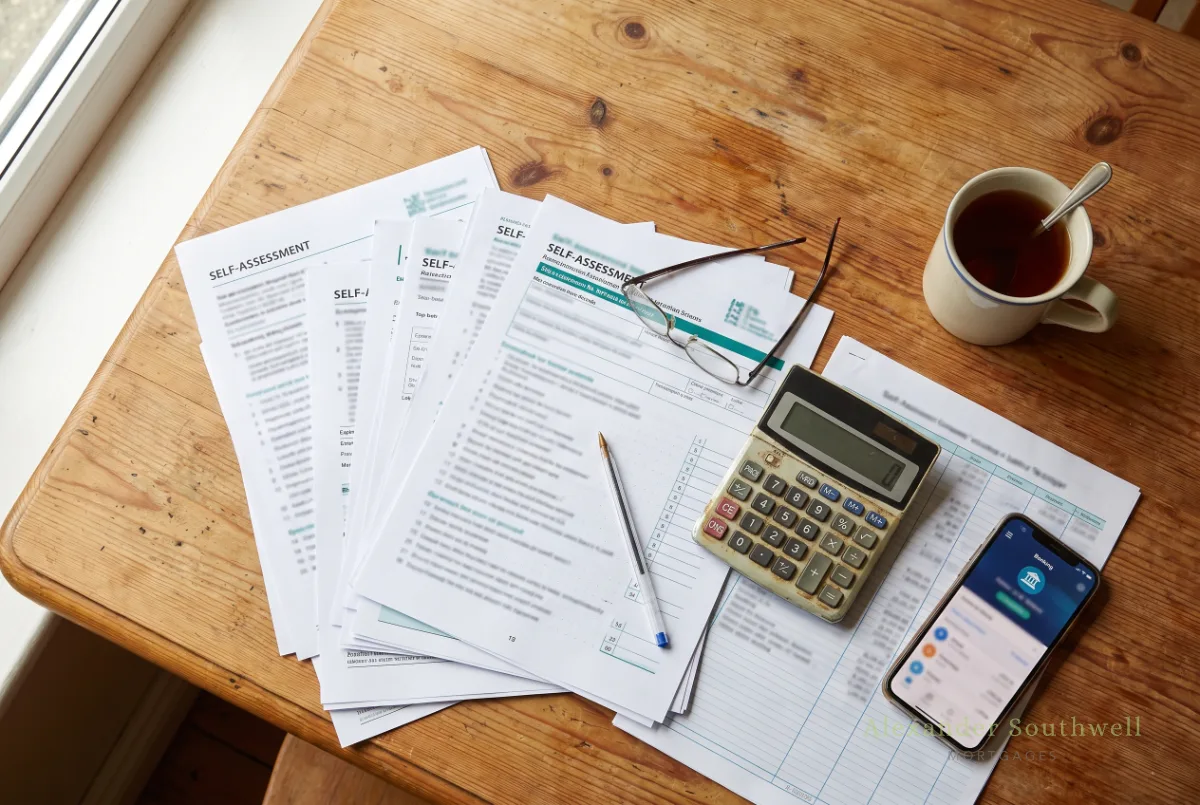
Most lenders want to see your income in HMRC's own documents rather than a spreadsheet. That means your SA302 tax calculation and the matching tax year overview for each year they look at. You can download both from your HMRC online account in minutes. Lenders check that the two match and that the years are recent, so file your tax return early if you are applying for a mortgage this year. Foster carers usually file self assessment in the same way, and our guide to mortgages for foster carers explains how lenders treat fostering income.
The expenses trade off: every pound you claim in expenses lowers your tax bill and your mortgage. If you know you are buying in the next year or two, talk to your accountant before the year end, not after. Claim what you are entitled to, but think twice about chasing every last deduction if a few thousand pounds of profit could decide which house you get.
Lending criteria vary a lot. High street lenders tend to be cautious with self employed borrowers who have a short trading history or a dip in profit, while specialist lenders may take a broader view. Some use your most recent year, some average the last two years. I've seen one set of accounts produce borrowing figures £40,000 apart, purely because of which lender looked at them.
Most lenders ask for two years of accounts or tax calculations. A smaller group will consider self employed applicants with only one year, especially if you stayed in the same line of work you were employed in before.
Once you have two years, the question becomes which figure the lender uses. Take a hairdresser whose net profit went from £32,000 to £41,000. A lender that averages two years works from £36,500. A lender that uses the latest year works from £41,000. At 4.5 times income that is £164,250 against £184,500, a £20,250 difference from exactly the same paperwork.
Falling profit works the other way. If your income slipped from £45,000 to £38,000, expect most lenders to use the lower, latest figure. One big high street lender, for example, has said it uses whichever is lower of the latest year or the two year average. A short note from your accountant explaining the dip can help a lot, whether it was a one off equipment purchase, time off after a baby, or a large client lost and since replaced.
Every self employed sole trader mortgage I arrange is a little different. These are the situations that come up most often.
If you went self employed in the same trade you were employed in, some lenders will accept one year of figures and a few will look at your previous job alongside it. A new career and a new business at once is harder, so it may be worth waiting for a second tax return.
Plenty of people run a business alongside a part time job. Most lenders can add your payslip income to your self employed income, as long as each part is evidenced properly.
Lenders usually use your share of the net profit from the partnership accounts, backed up by your own SA302. Two equal partners in a business making £80,000 would each typically be assessed on about £40,000.
Tell us straight away if you leave your job while a mortgage application is going through. Lenders assess you on your employment status at completion, so a change can mean the offer is withdrawn. It's usually safer to buy first and switch afterwards.
Lenders like to see deposit funds in a personal account. If your savings are in the business account, move them across in good time and keep the bank statements showing the transfer.
If you trade through a limited company the rules change, because lenders look at salary and dividends or your share of company profit. Construction workers paid under CIS have their own route too, often based on gross pay. Both are covered in our guides below.
If either of those last two sounds like you, read our guides to mortgages for limited company directors, CIS mortgages, or contractor mortgages, if you work on day rates.
Making Tax Digital for Income Tax started on 6 April 2026 for sole traders and landlords with qualifying income over £50,000. The threshold drops to £30,000 from April 2027 and £20,000 from April 2028. Qualifying income means your gross income from self employment and property before expenses, so it's turnover, not profit, that decides whether you are in.
In practice it means compatible software and quarterly updates to HMRC, then a final declaration after the year end. For mortgages, nothing changes overnight. Lenders still want your year end figures, your tax calculation and your tax year overview, and the quarterly updates don't replace them. If anything, MTD should help, because your records will be tidier.
Some lenders ask your accountant to confirm your income directly, usually on a short form or letter. It helps if you use a qualified accountant, chartered or certified for example, who has prepared your last two years. Do your own tax return? You can still get a mortgage. You just lean on the HMRC documents instead.
Getting these together early can save weeks: two years of SA302s and tax year overviews (one year if that is all you have), three months of personal bank statements, three months of business bank statements, photo ID, proof of address, and details of any loans, car finance or credit cards. It's worth checking your credit report before you apply too, and you can see how on our Check My File page.
Put in your net profit for the last one or two years. The calculator shows the income figure a lender might use under each method, the borrowing that gives at 4.5 times income, and a rough range. It's a starting point for illustration only, not financial advice.
Here's a simplified example, not a real client. Mark is a self employed plumber near Southampton. His net profit was £39,000 two years ago and £47,000 last year, and he earns another £6,000 a year from a part time PAYE job teaching evening classes. He has £30,000 saved and wants a £280,000 house, so he needs to borrow £250,000.
A lender that averages his self employed income works from £43,000 plus £6,000, which is £49,000. At 4.5 times that is £220,500. A lender that uses his latest year works from £47,000 plus £6,000, which is £53,000. At 4.5 times that is £238,500, and a lender prepared to go to 4.75 or 5 times income for his profile could reach £251,750 to £265,000, subject to affordability, his outgoings and a credit check.
Same plumber, same tax returns. The difference is which lender looks at them and how the case is put together. That's the part we handle, and on a mortgage of £100,000 or more with nothing unusual going on, it's usually fee free.
Sources and further reading: GOV.UK on Making Tax Digital for Income Tax, HMRC self assessment guidance, and the FCA Financial Services Register.
Being a sole trader doesn't usually mean a worse rate. With a clean credit file and two years of figures, self employed applicants can typically get the same deals as employed applicants. What really moves your rate is the size of your deposit and your credit history, not the fact that you work for yourself.
Buying your first place? Read our guide to first time buyer mortgages, and check what you could pay with our stamp duty calculator. Already own a home? We help sole traders with remortgages, as well as moving home mortgages. If you just want to know where you stand first, ask us for a mortgage in principle.
There's no sick pay when you work for yourself. If you could not work for three months, would the mortgage still get paid? We talk through income protection and life cover with every client. Your home may be repossessed if you do not keep up repayments on your mortgage.
Yes, with some lenders. You need one full tax year filed with HMRC, your SA302 and tax year overview, and ideally a background in the same type of work.
Net profit. For a sole trader, lenders work from the profit on your tax calculation after business expenses, not the money coming in.
Most lenders offer around 4 to 4.5 times your assessable income, and some go to 5 times or more for stronger profiles. On a net profit of £45,000, that typically means £180,000 to £202,500 before the lender checks your outgoings.
Not directly. Lenders still assess your year end figures and HMRC tax calculations. MTD for Income Tax started in April 2026 for qualifying income over £50,000, and the quarterly updates sit alongside your annual return rather than replacing it.
Often, yes, but expect most lenders to use the lower, latest figure. If the drop was a one off, a note from your accountant can help.
No. Many lenders work from your SA302 and tax year overview, which you can download yourself. Having a qualified accountant does widen your options, though.
Yes. Most lenders will add employed income from payslips to your self employed net profit, as long as both are properly evidenced.
Not usually. Rates depend mainly on your deposit and credit history. A sole trader with two years of figures and a clean credit file can typically get the same rates as an employed buyer.
Usually, yes, but move it into a personal account in good time and keep the statements. Lenders and solicitors need to see where the deposit came from.
Lenders don't all use the same sums, but most follow roughly these steps. Here's how it works for a sole trader whose net profit went from £38,000 to £46,000.
Averaged over two years that's £42,000. On the most recent year alone it's £46,000.
£42,000 x 4.5 = £189,000. Using the most recent year, £46,000 x 4.5 = £207,000.
The lender takes off your financial commitments, like car finance and childcare, then stress tests your monthly repayments at a higher rate.
Two years of SA302s and tax year overviews, three months of bank statements, ID and proof of address.
We get an agreement in principle from a lender that suits your figures before you make an offer.
Call 03300 432 428 or book an appointment and we'll go through your figures with you, usually within a day or two.
Lender criteria change all the time. A lender that suited sole traders last month may tighten up this month, which is why a good mortgage broker checks the market for every case rather than relying on a favourite.
Not quite a sole trader? These guides help
Speak to a mortgage broker who arranges sole trader mortgages every week. We handle the whole process, from the first call to completion, and most cases are fee free.