Most first time buyers who ring us about a credit problem have already decided the answer is no. Usually it isn't. A first time buyer mortgage with bad credit is possible in plenty of cases, but which lenders will look at you, how much deposit you need and the rate you pay all come down to three things: what went wrong, how long ago it happened, and whether it is now sorted. Here is how we work through it, followed by the other special circumstances we see every week, from self employed income to buying on your own.
How lenders read your credit report
When you apply, the lender runs a credit check with one or more of the main credit reference agencies: Experian, Equifax and TransUnion. They are not just looking at a number. An underwriter reads the detail on your credit file, including missed payments, defaults, county court judgements, any debt management plan or IVA, and how much of your available credit you are using. A low credit score on a free app is not the same as a declined mortgage. I have seen clients with a poor score get a high street deal, and clients with a decent score turned down because of one recent default.
Why recency matters more than anything
A late payment from five years ago with a clean record since is a very different story to a missed payment last month. Most adverse credit drops off your credit record after six years. The closer the problem is to today, the fewer lenders will consider it and the higher the interest rates tend to be. Satisfied (paid off) defaults and CCJs are treated more kindly than ones still outstanding, and small amounts, like a forgotten £150 phone bill, usually worry lenders far less than large ones.
Credit issue
How lenders tend to see it
What helps
Late or missed payments
Often fine if they are older and the account has been clean since. Recent ones narrow the choice.
Bring every account up to date and keep it there
Defaults
Lenders ask when it was registered, how much it was for and whether it is satisfied
Settle it and keep the proof
County court judgements (CCJs)
Treated much like defaults, with more weight on recent or unpaid judgements
Pay it and get a certificate of satisfaction
Debt management plan
Some lenders want it finished. Specialist lenders may consider a plan that is still running.
Keep every payment on time
IVA
Usually needs to be completed, and some lenders also want time to have passed since
Keep your completion certificate safe
Bankruptcy
Mostly specialist lenders for several years after discharge, usually with a bigger deposit
Rebuild your credit and save a larger deposit
Payday loans
Some lenders turn down any recent payday loan, even one repaid on time
Avoid them for at least a year before applying
This is a general picture from the cases we see, not any one lender's rules. Lending criteria change and every application is assessed on its own facts.
A worked example: buying a first home with a settled default
Here is an illustrative example of the kind of case we see a lot. Sophie earns £38,000 and wants a two bed terrace for £180,000 with an £18,000 (10%) deposit, so she needs to borrow £162,000, about 4.3 times her income. Her credit file shows a £600 mobile phone default from 2022, settled the following year, and one missed credit card payment in 2024. Her own bank declines her at the automated scoring stage. A lender that reads the detail rather than the score could well say yes, but probably at a higher rate. Over 30 years, £162,000 at an example rate of 4.5% costs about £821 a month. At 5.5% it is about £920. That £99 a month gap is why we would plan a remortgage once her record has been clean for a couple of years. Rates here are examples only, not current offers.
No credit history at all
This catches a lot of first time buyers out. If you have never had a credit card, a phone contract or a loan, lenders have nothing to go on, and a thin credit file can be declined just like a bad one. The fixes are dull but they work. Get on the electoral roll at your current address, put a household bill or phone contract in your name, and use a credit card for small amounts that you clear in full each month by direct debit. Give it six months. Some rent reporting schemes can also add your rent payments to your credit history.
Check your credit report before a lender does
Each credit reference agency holds slightly different information, so look at all three. We use Check My File because it pulls Experian, Equifax and TransUnion into one report, and it often turns up errors, such as an old address or a debt that was paid but never marked as settled. Find errors early and you can get them corrected before you apply. You can start a free trial through our Check My File link, and our guide to improving your credit score covers the rest.
Buying jointly when one of you has bad credit
Lenders look at both applicants, and the weaker credit history usually decides which lenders are open to you. That does not always mean the person with the clean record should go it alone, although sometimes that works out better if their income covers the borrowing. We run the numbers both ways. If family want to help with income rather than cash, a joint borrower sole proprietor mortgage can add a parent to the mortgage without putting them on the deeds.
Why a broker helps when your credit is not perfect
A declined application leaves a hard search on your credit file, and a string of them makes the next lender more nervous. We know which lenders are likely to accept your credit history before anything is submitted, and many let us run a soft search first. Our advice is fee free on most applications. Complex and adverse cases can carry a fee depending on the circumstances, up to £995, and we always tell you before any work starts. For the full picture, see our bad credit mortgages guide.
Bad credit is only one of the reasons a first purchase can feel harder than it should. These are the others that come up most often. Each one has its own guide if you want the detail, and none of them is a reason to give up on buying.
Self employed first time buyers
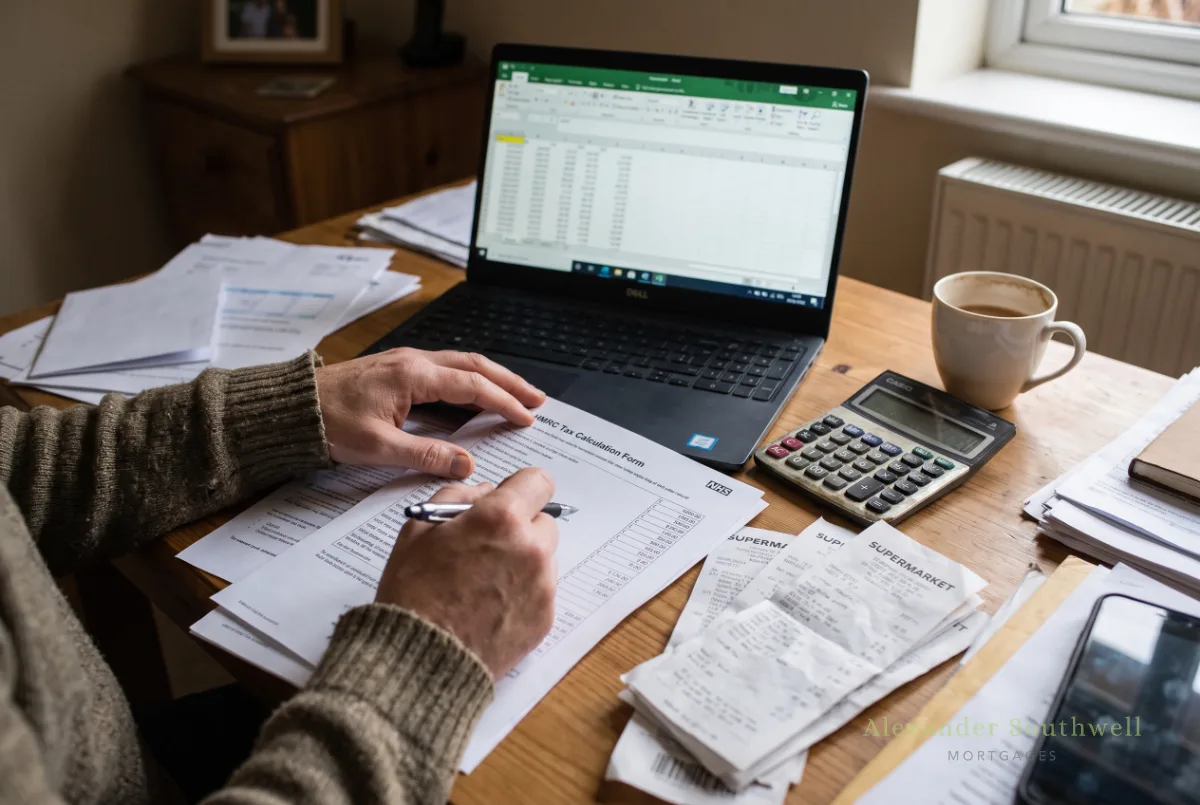
Most lenders want two years of figures, usually your SA302 tax calculations and tax year overviews, or company accounts if you trade through a limited company. Some will go on one year if the income is steady and the business looks settled. Your income is normally the figure on your tax returns, so if your accountant has worked hard to keep that number low, it will also cap what you can borrow. This is the bit that trips people up. There is more on our self employed mortgages page, with separate guides for sole traders, limited company directors and contractors.
Buying on your own, on one income
One salary usually means a smaller loan. Lenders typically lend around 4 to 4.5 times income, with some going higher for the right profile, so on £35,000 you are looking at roughly £140,000 to £157,500 before your outgoings are taken into account. If that falls short of local prices, a longer term, help from family or shared ownership can close the gap. The quick check further down gives you a rough starting figure.
Older first time buyers and mortgage term
More people are buying their first home in their late thirties, forties and beyond. Age on its own is rarely the problem; the term is. Many lenders want the mortgage repaid by around 70 or 75, and some will go later if your pension will cover the payments. Someone buying at 45 might be offered 25 years rather than 35, which pushes the monthly repayments up and the maximum loan down. Our guide on whether there is an age limit for a mortgage goes into more detail.

Family help and gifted deposits
Most lenders accept a gifted deposit from parents or grandparents, as long as it really is a gift and not a loan. The person giving the money signs a gifted deposit letter confirming they expect nothing back and will have no stake in the home, and your solicitor will want to see where the money came from. If your family can help but would rather not hand over cash, a guarantor mortgage or adding them as a joint borrower may work instead. Our guide to the bank of mum and dad runs through the options and the risks for the people helping.
Visa holders and non UK nationals
You do not need to be a British citizen to buy a home here. Lenders typically look at how long you have lived in the UK, the type of visa you hold and how long it has left to run, and some ask for indefinite leave to remain or settled status. The choice of lenders tends to widen once you have been here a couple of years. Our foreign national mortgages page has the detail.
New job or still on probation
Changing jobs before you buy is normal, and you do not always have to wait. Some lenders will accept a new permanent contract from day one, others want you through probation or want to see three months of payslips. A move within the same line of work for more money usually counts in your favour. Contractors and agency workers are assessed differently, so tell us exactly how you are paid.
Maternity or paternity leave
You can apply while on maternity leave. Lenders generally want to know when you are going back, on what hours and at what salary, usually confirmed in a letter from your employer. Some will use your return to work income if you will be back soon after the mortgage starts. If you are going back part time, the reduced income is what counts, and childcare costs come off your affordability.
Benefits as part of your income
Some lenders will count certain benefits, such as Child Benefit, Universal Credit or disability benefits, alongside a salary, while others ignore them completely. Very few will lend on benefits alone. Which ones count, and how much of them, varies a lot between lenders, so this is one we always check before you apply.
Student loans
A student loan does not show on your credit file, so it will not hurt your credit history. Lenders do treat the repayment as a monthly commitment because it comes straight off your payslip. On a £35,000 salary with a Plan 2 loan that is around £40 to £50 a month (9% of what you earn above the threshold), which trims a little off the maximum amount you can borrow but rarely stops a mortgage on its own.
Quick check: roughly how much could you borrow?
Put in your income and any monthly credit commitments for a ballpark figure.
For illustration only and not financial advice. Real lending depends on your credit history, outgoings, deposit and each lender's criteria. Your home may be repossessed if you do not keep up repayments on your mortgage. Can I get a first time buyer mortgage with a default?
Often, yes. How many lenders will consider it depends on when the default was registered, how big it was and whether it has been settled. A satisfied default from three years ago is a very different case to one from last month.
Do I need a bigger deposit with bad credit?
Not always. Older or minor issues may still be possible with a 10% or even 5% deposit. More serious or recent problems usually need a larger deposit, often 15% or more, and a bigger deposit tends to bring the rate down too.
Will checking my own credit report hurt my score?
No. Checking your own file is a soft search that lenders cannot see. It is applying for credit that leaves hard searches, which is why we try to avoid unnecessary applications.
How long should I wait after a missed payment?
There is no fixed rule. Some lenders will look past a single missed payment once you have had a clean run since, others want longer. Speak to us before you apply anywhere, so a decline does not make things worse.
Your home may be repossessed if you do not keep up repayments on your mortgage. Examples, figures and the quick check on this page are for illustration only and are not financial advice.